Two Numbers, One Market
Two figures, published within six months of each other, describe the same industry. IFPI's Global Music Report 2026 records a 15.2 per cent rise in recorded-music revenue across the Middle East and North Africa in 2025, more than double the global rate of 6.4 per cent. And Spotify's first Loud & Clear report for Saudi Arabia puts the total royalties generated by Saudi artists on the platform in 2024 at about $3.5 million. Not per artist. All of them, combined.
Both numbers are accurate. The distance between them is the story of this market: a business that is genuinely expanding, wrapped around an artist economy that remains, in revenue terms, largely unbuilt. Where the growth money actually goes, and why so little of it currently reaches the people who make the music, is a question with specific, checkable answers.
What the Growth Figure Measures
Start with what IFPI counts. Its regional figures track trade revenue: money accruing to record companies and other rights holders from streaming, physical sales, downloads and performance rights. In MENA, streaming supplies 97.5 per cent of that revenue, the most streaming-dependent profile of any region IFPI measures. The year before, the federation's 2025 report put the region's growth at 22.8 per cent, the fastest in the world, with streaming at 99.5 per cent of revenue.
What the trade figure does not measure is distribution within the chain. Ghurba's earlier breakdown of the 2026 report made the basic point: a regional growth percentage says nothing about country, genre or artist share. Follow the revenue along its actual route, from platform to distributor to label to artist, with songwriting royalties running on a separate and much weaker track, and each step explains part of the gap.
The Platform Layer
The region's streaming income runs through a small set of companies. Spotify has run its MENA operation from Dubai since November 2018. Anghami, the Nasdaq-listed, Abu Dhabi-headquartered regional platform, reported revenue of $99.3 million for 2025, up 27 per cent, on 3.5 million paying subscribers across Anghami and the OSN+ video service it now operates. That is the entire annual topline of the region's flagship music platform: smaller than the marketing budget of a single global album campaign at a major label.
Streaming royalties are paid out of pooled subscription and advertising revenue, so what a stream is worth depends on what the listeners around you pay. MENA subscription prices sit well below American and European levels, a large share of listening happens on free ad-supported tiers, and regional advertising rates are low. A market can therefore add listeners at speed while adding artist income slowly. No platform publishes per-stream payout data for MENA, an absence Ghurba has noted before, and one that makes every confident per-stream claim about the region suspect.
The Consolidation Layer
The second route the money takes is ownership. In February 2021, Warner Music Group bought a minority stake in Rotana Music, the Saudi-owned label whose catalogue includes many of the biggest pan-Arab stars of the past three decades; Bloomberg reported the deal valued Rotana at roughly $200 million. Two months later, Universal's Republic Records launched Universal Arabic Music with Lebanese-Canadian manager Wassim "Sal" Slaiby, signing the Jordanian teenager Issam Alnajjar, then riding a global TikTok hit, as its first artist.
These deals are rational. Catalogue and distribution rights in a growing market are worth owning. But their structure shows where the value is understood to sit: in existing catalogue, and in global routing for a small number of crossover candidates, rather than in broad domestic artist development. When growth arrives in a market where the dominant local catalogue is controlled by one group and distributed globally by another, the first beneficiaries are, by design, the owners.
The Publishing Hole
Recorded music is half of an artist economy. The other half, songwriter and composer royalties from public performance, broadcast and publishing shares of streaming, barely exists in most of the region. CISAC's Global Collections Report 2025 shows worldwide author royalty collections of €13.97 billion in 2024. Its Africa region, which contains the author societies of Egypt and the Maghreb, collected €90 million: about 0.6 per cent of the global total.
The Gulf's numbers are harder to state because for most of the streaming era there was nothing to count. No Gulf state had a licensed authors' collecting society for most of the past decade. ESMAA, operating from Abu Dhabi since 2021, works as a private rights-management entity licensing public performance in the UAE. Only in 2025 did the UAE's Ministry of Economy license the Emirates Music Rights Association, described by CISAC as the Gulf's first non-profit collective management organisation, and approve a second entity, Music Nation, that June. Radio play, hotel and mall usage, live performance of covers: revenue streams songwriters elsewhere have collected for a century went largely unmonetised in the region's richest markets throughout the boom the industry is now celebrating.
For a working songwriter in Cairo or Casablanca, the practical meaning is that one of the two legs their income is supposed to stand on has been missing throughout the years the market doubled.
Three Markets Wearing One Acronym
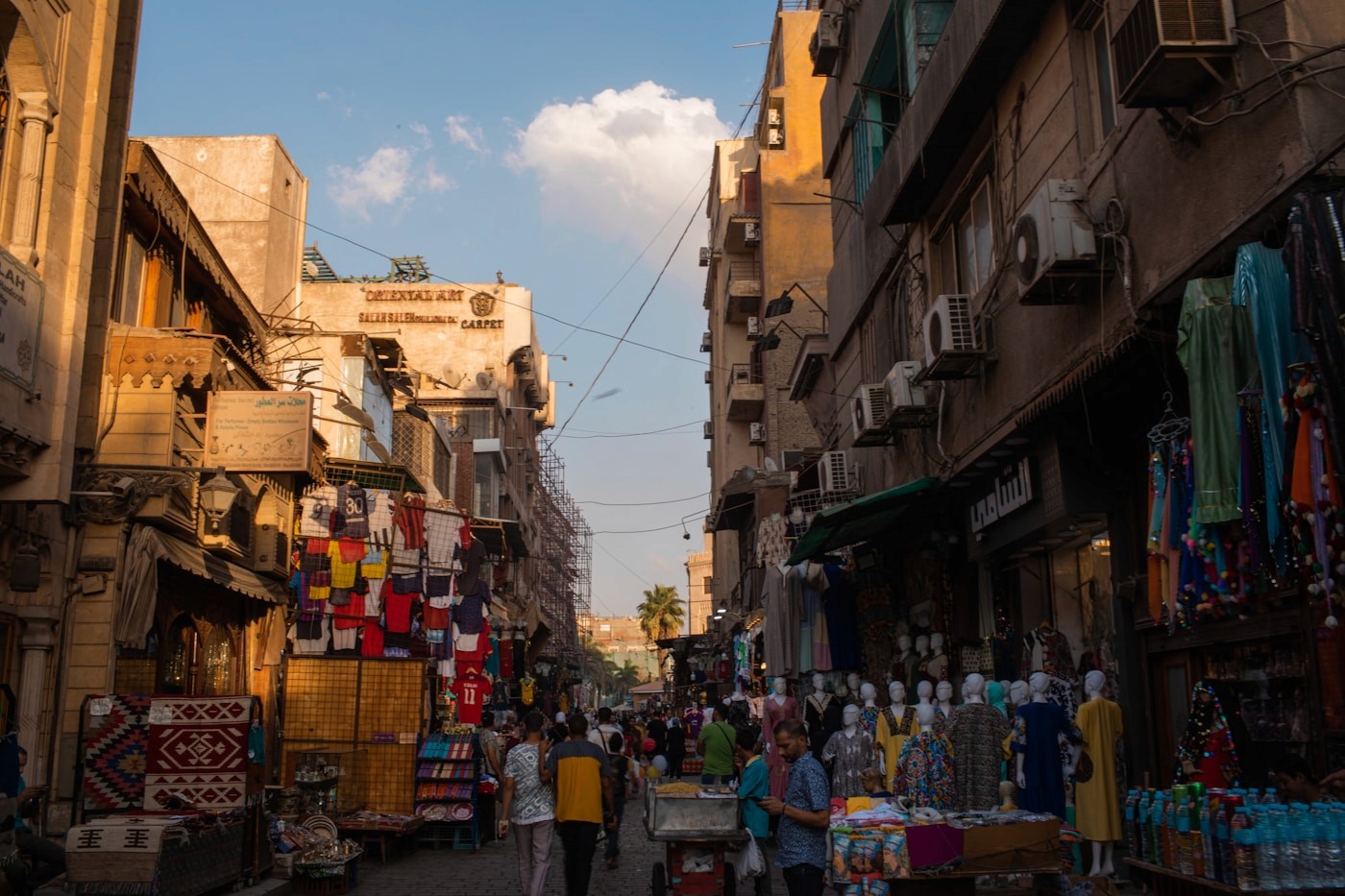
The regional average also conceals three different economies. In the Gulf, spending power is high, state investment in live entertainment is heavy, and the recorded catalogue base is comparatively thin; the money there is newest and most concentrated in events and infrastructure. Egypt is the volume market: Spotify data released in mid-2025 and reported by Egyptian Streets said royalties earned by Egyptian artists doubled between 2023 and 2024, with more than 90 per cent going to independent artists and labels. Mahraganat and Egyptian rap built an audience with almost no institutional support, and it shows in who captures the income. In the Maghreb, listening runs disproportionately through YouTube and through France, where many Moroccan, Algerian and Tunisian writers are members of European societies, so even collected royalties often route through Paris rather than local institutions.
The Case Against This Argument
The honest counter-reading is that every artist-side indicator that is published is rising fast. Saudi artist royalties on Spotify grew 76 per cent in 2024, first-time discoveries of Saudi artists grew 75 per cent, and more than 90 per cent of those royalties came from listeners outside the country. Egyptian artist royalties doubled, with an independent share that is extraordinary by global standards. If the new Gulf collection bodies distribute honestly and efficiently, they could unlock a songwriter income stream that never previously existed. On this reading, artist income is not failing to arrive. It is arriving late, from a base near zero, at growth rates most markets would envy.
The weakness of the optimistic reading is not that it is wrong. It is that it depends entirely on infrastructure that is either brand new, unbuilt or undisclosed, and on percentages whose base values are tiny. A national artist economy that doubles from the low millions is still smaller than the production budget of one primetime television season.
What No One Publishes
A short list of what remains unavailable, because it defines the limit of every claim in this piece, including the optimistic ones. IFPI's public summary does not disclose MENA's absolute revenue figure. No streaming platform publishes MENA per-stream rates, or country payout totals beyond selective Loud & Clear releases. Label and distributor deal terms are private, which is normal everywhere, but no regional artist-income survey exists to stand in for them. The new Gulf collection bodies have yet to publish distribution figures. Anyone claiming to know precisely what share of the region's growth reaches artists is describing their confidence, not the data.
Growth Is a Precondition, Not a Payout
None of this makes the boom fake. Real subscriptions are being sold, real royalties are compounding from a low base, and the region's musicians have global reach their predecessors never had. More than nine in ten royalty dollars earned by Saudi and Egyptian artists on Spotify now come from outside their home countries, which is a genuinely new fact about the economics of Arabic music.
But an industry is measured by what it distributes, not what it collects. The next few years will show whether EMRA and Music Nation actually pay out, whether platforms extend royalty transparency beyond curated country reports, and whether local repertoire's share of regional streaming ever becomes a published number. Until then, the most accurate description of MENA's music economy is the narrow one. The business is booming. The profession is still waiting for its share.
Key Facts
MENA recorded-music revenue grew 15.2% in 2025; global revenue grew 6.4% to $31.7bn (IFPI Global Music Report 2026).
Streaming accounts for 97.5% of MENA recorded-music revenue, the highest share of any region IFPI measures.
In 2024 MENA was the world's fastest-growing region at 22.8%, with streaming at 99.5% of revenue (IFPI Global Music Report 2025).
Saudi artists earned about $3.5m in Spotify royalties in 2024, up 76% year on year; over 90% came from listeners abroad (Spotify Loud & Clear, via The National).
Royalties earned by Egyptian artists on Spotify doubled between 2023 and 2024; more than 90% went to independent artists and labels (Spotify data, via Egyptian Streets).
Anghami reported FY2025 revenue of $99.3m, up 27%, on 3.5m paid subscribers across Anghami and OSN+ (company release, April 2026).
CISAC's Africa region collected €90m in author royalties in 2024, about 0.6% of the €13.97bn collected worldwide (CISAC Global Collections Report 2025).